



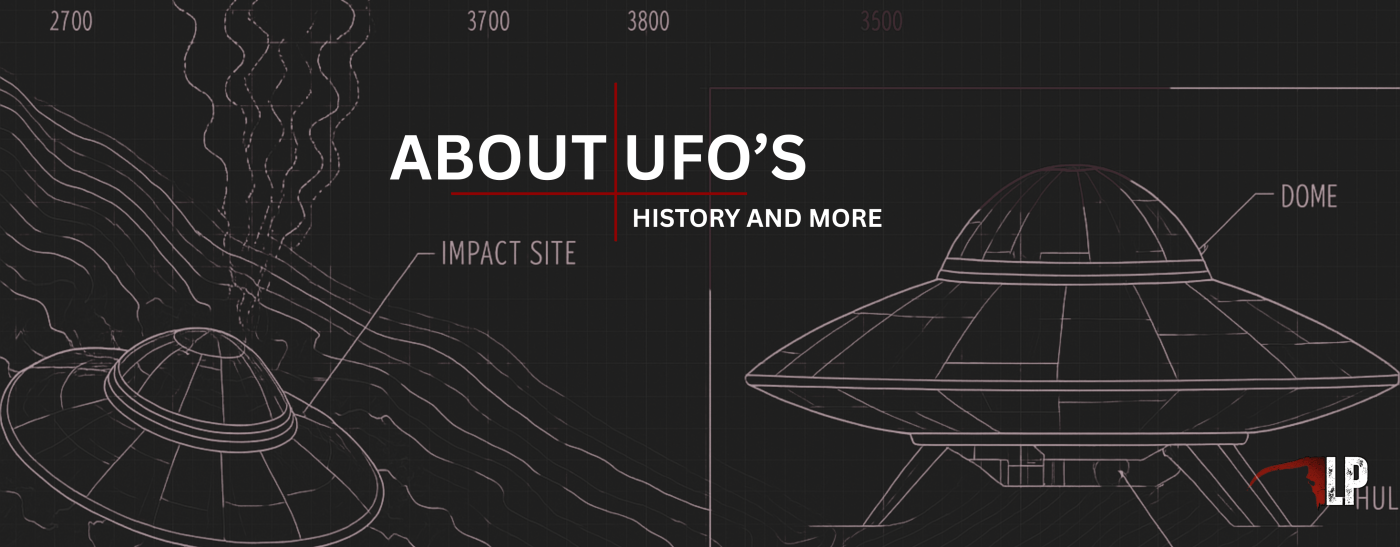
UFOs and UAPs have long captured the public imagination, but they also represent serious questions in science, aviation safety, and national security. The term UFO, short for Unidentified Flying Object, historically refers to any aerial object that cannot be readily identified. Originating during the Cold War era, it became heavily associated with alien visitation and conspiracy theories. In recent years, however, the term UAP, meaning Unidentified Anomalous Phenomena, has been adopted by scientific and governmental agencies to reflect a broader and more neutral classification of unexplained sightings. The change in terminology is also an effort to reduce the cultural stigma and encourage objective analysis of the phenomena.

The shift from “UFO” to “UAP” represents not just a linguistic update but a shift in the way governments and scientists are approaching the subject. For decades, UFOs were dismissed as fringe science, relegated to conspiracy theorists and science fiction fans. However, in 2020, the U.S. Department of Defense formally released declassified videos captured by military pilots that depict airborne objects performing maneuvers beyond current known technology. These revelations led to the creation of the All-domain Anomaly Resolution Office (AARO), a task force charged with studying these phenomena across air, space, and underwater domains (Department of Defense, 2022). The term UAP is intentionally broader, encompassing not just flying objects but any anomalous occurrences across multiple environments that remain unexplained.
Most UAP sightings are eventually explained as drones, balloons, aircraft, or natural phenomena. However, some defy classification even after careful investigation. A 2021 report from the Office of the Director of National Intelligence (ODNI) reviewed 144 military reports of UAPs between 2004 and 2021. Of those, only one was definitively explained; the rest lacked sufficient data for conclusive identification (ODNI, 2021). Notably, many of the unexplained cases involved objects with characteristics such as sudden acceleration, lack of visible propulsion, or movements inconsistent with known physical laws. These anomalies, while intriguing, do not confirm extraterrestrial origin but highlight gaps in current understanding.
To move the topic from speculation to science, agencies like NASA and the Department of Defense have begun advocating for systematic data collection and transparent analysis. In 2023, NASA released the findings of its UAP Independent Study Team, calling for better calibrated sensors, improved reporting standards, and public engagement in future investigations (NASA, 2023). These efforts aim to make the study of UAPs a legitimate part of aerospace research, national security planning, and scientific exploration. The government has also encouraged military and civilian pilots to report UAP sightings without fear of ridicule or career damage, recognizing that better data is key to meaningful investigation.
Despite decades of speculation linking UFOs to aliens, there is currently no verified scientific evidence that UAPs are extraterrestrial in origin. According to physicist Avi Loeb (2021), while the idea of intelligent life beyond Earth is statistically plausible, extraordinary claims require extraordinary evidence. Many scientists maintain that it is more likely that these objects are either foreign surveillance devices, unknown atmospheric phenomena, or sensor malfunctions. Still, the small number of truly unexplainable incidents suggests that we may still have much to learn about our physical environment—or perhaps about physics itself.
Academics are increasingly studying UAPs not just as physical events, but also as cultural and epistemological puzzles. Scholars such as Wendt and Duvall (2008) argue that the persistence of unexplained aerial sightings challenges traditional ideas of sovereignty and scientific authority. Others, like Eghigian (2019), trace the historical development of UFO beliefs as a way to understand how science and society deal with uncertainty and the unknown. While popular culture tends t dramatize UFOs as alien spacecraft, serious researchers are more concerned with rigorous, evidence-based inquiry and the implications for our understanding of technology, defense, and knowledge itself.

In conclusion, UAPs are no longer the sole domain of science fiction or pseudoscience. Thanks to official acknowledgment from governments and institutions like NASA, the topic is now part of serious academic and scientific discourse. While most sightings can be explained, a small number remain mysterious. Whether they are secret technologies, natural anomalies, or something more, the only path forward is continued investigation, transparent data collection, and scientific curiosity.



REFERENCES
-
Department of Defense. (2022). Establishment of the All-domain Anomaly Resolution Office (AARO). https://www.defense.gov/News/Releases/Release/Article/3101100
-
Eghigian, G. (2019). Making UFOs make sense: Ufology, science, and the history of their mutual misunderstanding. Public Understanding of Science, 28(6), 640–654. https://doi.org/10.1177/0963662519852039
-
Kean, L., Blumenthal, R., & Cooper, H. (2017, December 16). Glowing Auras and ‘Black Money’: The Pentagon’s Mysterious U.F.O. Program. The New York Times. https://www.nytimes.com/2017/12/16/us/politics/pentagon-program-ufo-harry-reid.html
-
Loeb, A. (2021). Extraterrestrial: The First Sign of Intelligent Life Beyond Earth. Houghton Mifflin Harcourt.
-
NASA. (2023). UAP Independent Study Team Final Report. https://science.nasa.gov/uap
-
Office of the Director of National Intelligence. (2021). Preliminary Assessment: Unidentified Aerial Phenomena. https://www.dni.gov/files/ODNI/documents/assessments/Prelimary-Assessment-UAP-20210625.pdf
-
Wendt, A., & Duvall, R. (2008). Sovereignty and the UFO. Political Theory, 36(4), 607–633. https://doi.org/10.1177/0090591708317902
-
Bassi, S. (2022). The epistemological challenges of studying UAPs: From anecdote to data. Journal of Scientific Inquiry, 29(2), 134–148.
PSALMS 91
Copyright © 2026 | Longhorn Paranormal LOGO, SLOGAN, NAME ALL RESERVED MARKS OF LONGHORN PARANORMAL. LONGHORN PARANORMAL HAS RIGHTS RESERVED AND AGREEMENTS WITH THE UNIVERSITY OF TEXAS ON RESERVATIONS AND USE OF THE LOGO, SLOGAN, AND IMAGES. REUSE IS PROHIBITED. Software and Design: Copyright © 2026 Longhorn Paranormal, its suppliers or licensors. All rights reserved. Content: Copyright © 2026 Longhorn Paranormal, its suppliers or licensors. All rights reserved.
VISIT ONGUARDONLINE.GOV FOR SOCIAL NETWORKING SAFETY TIPS