







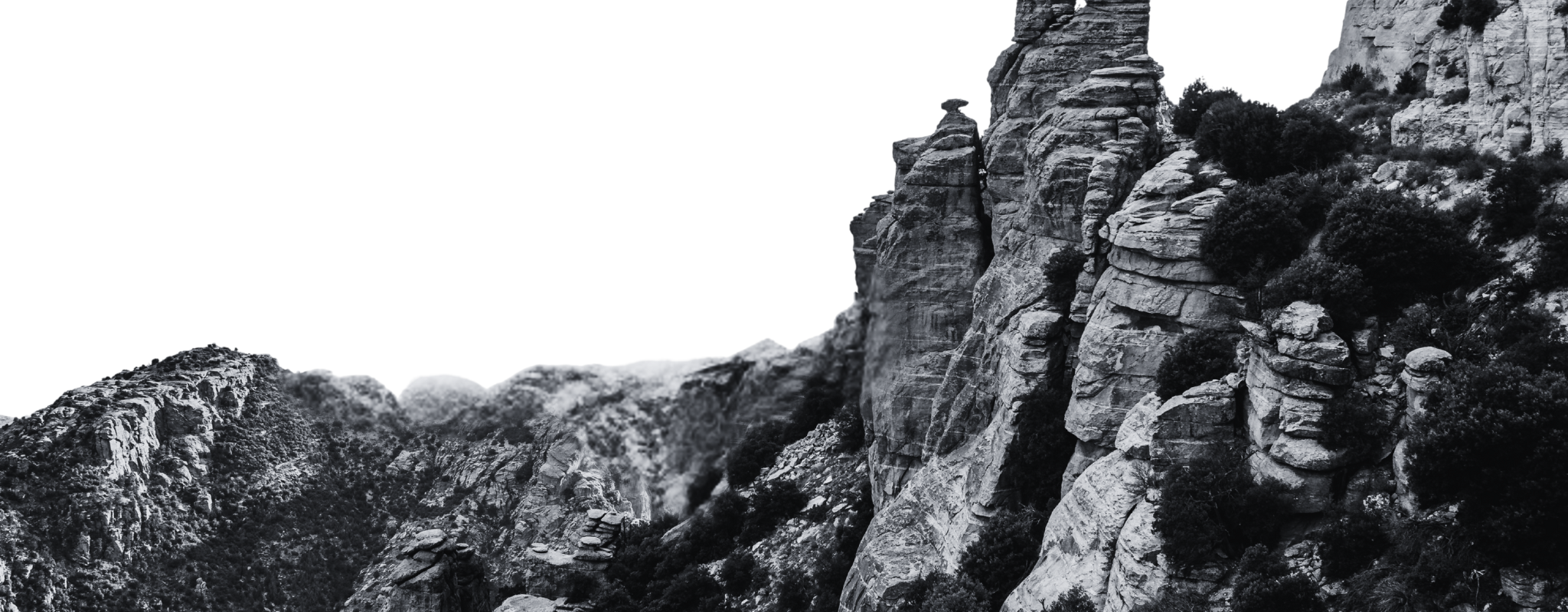
Mount Lemmon rises from the Sonoran Desert like a world of a pine-covered sanctuary in the Santa Catalina Mountains, where the heat of the desert gives way to cool mountain air and alpine forest. This is the kind of place that offers all seasons and a reprieve from desert temperatures. Known for its scenic drives, ski slopes, and breathtaking views, Mount Lemmon also carries a far more mysterious reputation. Beneath its tranquil surface and observatories pointed toward the heavens, rumors whisper of hidden bunkers, sealed chambers of gold, and military secrets buried deep within the granite heart of the mountain.
Local lore tells of a heavily fortified underground base built somewhere within Mount Lemmon during the Cold War, a classified installation designed for communication, research, or perhaps something far stranger. Hikers and explorers have long reported stumbling upon vent shafts, disguised entrances, and sealed tunnels, especially near the mountain’s north andnorthwest face.
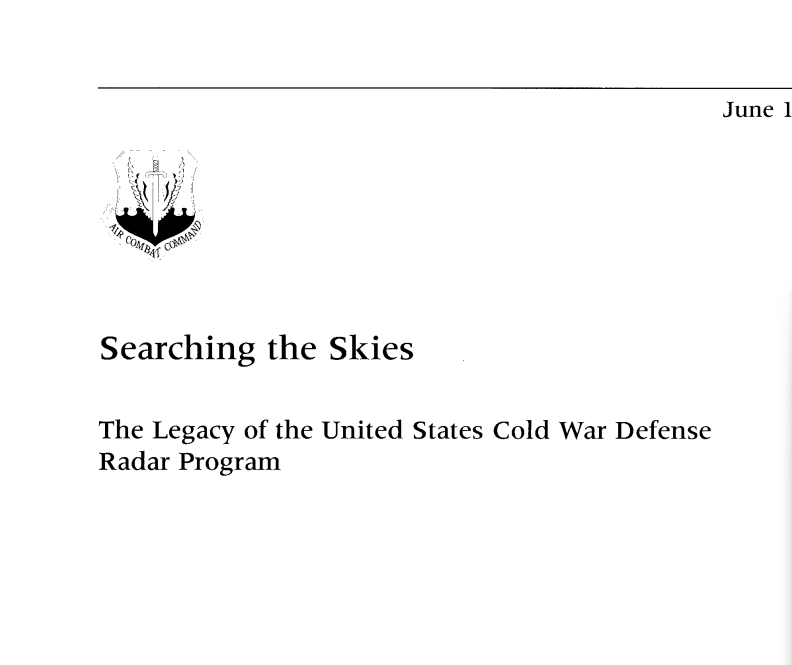
Truth does exist. Mount Lemmon did serve as a military installation during the Cold War, the bunkers do exist. Long before Mount Lemmon became known for its observatories and scenic overlooks, its summit played a quiet but vital role in America’s Cold War Defense Network. Beginning in early 1956, the mountain became home to the Mount Lemmon Air Force Station, operated by the 684th Aircraft Control and Warning Squadron under the Air Defense Command (ADC). From its lofty perch above 9,000 feet, the station formed part of a chain of early-warning radar installations stretching across the United States, designed to detect and track Soviet bombers that might approach the continent through Mexico or along southern flight corridors.
The Air Force constructed reinforced concrete bunkers, radar domes, and underground facilities carved into the mountain itself, providing both protection and stability for sensitive electronic systems. The site included barracks, fuel storage, and a network of access tunnels, much of it believed to be built to withstand nuclear fallout and continue operations during an attack. Inside those mountain chambers, radar operators worked in dimly lit rooms surrounded by glowing screens, scanning the desert skies for unidentified blips that could have heralded the beginning of a new world war.
Communication from Mount Lemmon linked int Sage and the direction center linking to places directly such as Luke Air Force Base, Davis–Monthan, and other ADC sites in the region, forming a defensive grid capable of coordinating jet interceptors at a moment’s notice. To maintain secrecy and operational readiness, much of the mountain’s infrastructure was restricted, with access roads guarded and construction shrouded in classified documentation. Even local Tucson residents, who could sometimes glimpse the rotating radar sites from the valley below, rarely knew what went on above the clouds.
By the late 1960s, advances in satellite surveillance and long-range radar rendered the mountaintop site obsolete, and the station was officially decommissioned in 1969 as intercontinental ballistic missiles (ICBMs) became increasingly prevalent. Yet, as with many Cold War installations, remnants of the Mount Lemmon Air Force Station were never fully dismantled. Some locals and researchers believe that sealed chambers, reinforced doors, and ventilation shafts still lie hidden beneath layers of rock and pine forest. Portions of the confirmed abandoned structures were later adapted for scientific use, giving rise to the Mount Lemmon Observatory complex operated by the University of Arizona.
Today, where once airmen stood guard against the threat of nuclear war, astronomers now search the heavens for asteroids and distant galaxies. Still, the enduring myths of hidden bunkers, gold-filled rooms, and classified research labs likely find their roots in the mountain’s very real history of secrecy, reinforced steel, and Cold War vigilance. In a way, Mount Lemmon has always been watching the skies — only now, its mission has shifted from defense to discovery.

The most enduring legend centers on the “Iron Door”, a massive metal barrier rumored to guard the entrance to a vast subterranean vault or complex. Some claim the door conceals chambers filled with Aztec, Spanish or Jesuit gold, hidden by missionaries or natives fleeing conflict centuries ago. Others insist the door leads to a modern research facility, its existence scrubbed from official maps, protected by both terrain and secrecy.
Whether the Iron Door hides treasure or technology, its story endures, passed down by miners, hikers, and residents who swear that heavy machinery once operated beneath the mountain. A few have even claimed to have found it and seen skeletons, swords, and treasure inside. A few even claim to have heard low mechanical hums at night or seen unmarked aircraft circling the peak before disappearing into shadow.
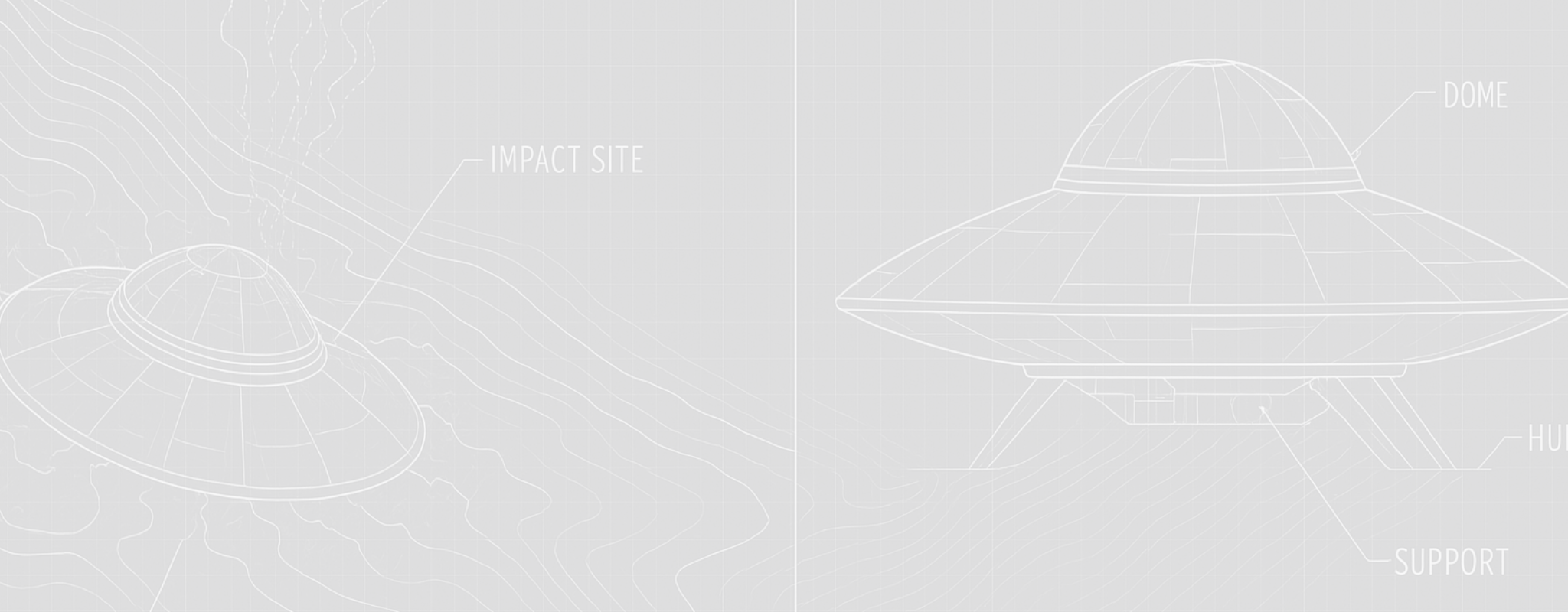
Mount Lemmon has also become a focal point for UFO activity in southern Arizona. Its elevation and isolation make it an ideal vantage point for observing the skies, especially over the various bases, and, some say, for encounters with the unknown. Witnesses describe glowing discs drifting silently over the Catalina ridges, bright orbs rising vertically from the canyons, and formations of lights moving in perfect unison. Amateur astronomers working at the Mount Lemmon SkyCenter have occasionally reported strange luminous objects that defy conventional explanation, vanishing suddenly or moving against wind currents.
Some theorists believe the supposed bunker beneath Mount Lemmon could be linked to these sightings, possibly as part of a covert aerospace or energy project. The combination of restricted airspace, frequent aerial activity, and radar anomalies has only fueled speculation that something extraordinary may be happening above (or below) the mountain.
Only a short distance south lies Davis–Monthan Air Force Base, home to the A-10 Warthog fleet and one of the largest aircraft boneyards in the world. The proximity of advanced aircraft testing has often been cited as an explanation for strange lights, yet some events go beyond the ordinary. In the early 2020s, Tucson police officers responding to reports of high-speed aerial lights encountered a craft that accelerated far beyond known aircraft capabilities flying over 100 miles per hour, elevating over 14,000 feet up and out running a police helicopters capabilities and fuel. According to witnesses, the police helicopter pursuing it recorded radar returns that indicated impossible maneuvers, sharp turns, vertical climbs, and instant directional shifts. Despite official silence on all the details, transcripts and news accounts leaked online, suggesting that even trained pilots could not identify what they saw that night and that no one could confirm it was a drone.
Adding to the mystery, An A-10 Warthog had an unusual incursion during the same period with a UFO. Whether this was a training mission, an interception, or something unrecorded in public logs remains unknown but the government has released the footage and people are talking about what is happening at these military training areas. Congress has began having briefings where the focus of dicussion is “Are our skies safe? Are our bases safe? And why there?” To this day, the Tucson regions “fast mover” incidents are cited by UFO researchers as some of the most compelling modern aerial encounters in Arizona, showcasing some of the best evidence released, leaning the needle away from conspiracy towards fact.
Whether truth or folklore, the pattern remains, Mount Lemmon has always been a mountain that listens to the sky, watching, recording, and reflecting humanity’s eternal fascination with what lies beyond the stars. Mount Lemmon is the door to southern Arizonas Pandora’s Box: Tucson, a place of both scientific exploration and enduring enigma. Mount Lemmons summit hosts telescopes searching the heavens for asteroids and distant galaxies, while its canyons echo with legends of hidden bases, buried gold, and encounters beyond comprehension. The desert winds may carry tales taller than the saguaros below, but the mountain itself remains silent, a sentinel over Tucson’s lights, keeping its secrets sealed beneath stone and sky.





PSALMS 91
Copyright © 2026 | Longhorn Paranormal LOGO, SLOGAN, NAME ALL RESERVED MARKS OF LONGHORN PARANORMAL. LONGHORN PARANORMAL HAS RIGHTS RESERVED AND AGREEMENTS WITH THE UNIVERSITY OF TEXAS ON RESERVATIONS AND USE OF THE LOGO, SLOGAN, AND IMAGES. REUSE IS PROHIBITED. Software and Design: Copyright © 2026 Longhorn Paranormal, its suppliers or licensors. All rights reserved. Content: Copyright © 2026 Longhorn Paranormal, its suppliers or licensors. All rights reserved.
VISIT ONGUARDONLINE.GOV FOR SOCIAL NETWORKING SAFETY TIPS